Computex should be where small computers multiply like sensible little bricks. You expect new mini PCs, better ports, lower prices, and at least one machine whose name appears to have been assembled during a minor printer emergency. This year, our video from Computex 2026 told a different story.
The short version: AI PCs were everywhere, traditional mini PCs felt thin on the ground, and memory prices are doing that thing where a normal upgrade starts looking like a small legal dispute. There were bright spots, especially handhelds, but the cheap mini PC wave that made this category fun is under pressure.
Quick Verdict
Computex 2026 was worth talking about, but not because it gave us a tidy shopping list. It showed a market being pulled toward AI workstations, Arm platforms, NAS boxes, and expensive handheld gaming machines. If you wanted another wave of bargain N100-style boxes, this was not your festival. If you wanted a preview of where the industry is trying to drag everyone next, bring a clipboard and a suspicious eyebrow.
What Changed At Computex
The biggest change was the mood. In previous years, mini PC booths felt busy with new shapes, new APUs, and the lovely promise of useful computing without a tower under the desk. This time, the floor felt more cautious: fewer traditional models, more AI labels, more workstation talk, and more boxes aimed at buyers who apparently keep spare thousands in a decorative bowl by the router.
That does not mean all AI hardware is nonsense. Local AI can be useful, and compact machines with serious memory bandwidth could become genuinely interesting. The problem is the usual one: companies have leapt straight to the bit where everyone is told they need it before anyone has calmly proved why.
Nvidia RTX Spark Is The Big Question
The RTX Spark class of machines could be important. The idea is simple enough: put a powerful Arm CPU, Blackwell graphics, and a large pool of unified memory into Windows laptops and compact desktops, then sell them as local AI machines.
That sounds exciting if you run models, build AI tools, or need compact CUDA hardware. For everyone else, the question is less glamorous: will it run normal Windows software well, will games behave, will pricing make sense, and will the whole thing feel like a computer rather than a committee meeting with a power button?
We want to test it properly. Until then, we are not crowning anything. Marketing can wear a sash if it likes, but it still has to do the washing up.
The Handhelds Were The Bright Spot
The MSI Claw 8 EX AI+ was the device that actually made us stop and enjoy ourselves. In our hands it felt much closer to a proper controller than most Windows handhelds, with grips, texture, haptics, and a big screen that made F1 2025 feel properly convincing.
That matters. Handheld PCs often win the spec sheet and then lose the moment your hands start filing a formal complaint. This one felt like a high-powered mini PC strapped to a portable display with an Xbox-style controller attached. Brrrp, there is the appeal.
The catch is price. Early pricing puts this class of handheld well above impulse-buy territory. Performance may be excellent, but once a handheld starts drifting toward laptop money, it has to justify every gram, every fan curve, and every battery claim.
Traditional Mini PCs Felt Quiet
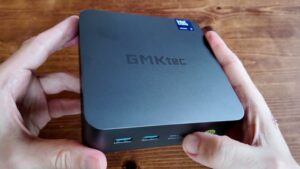
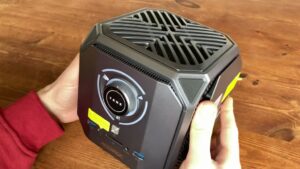
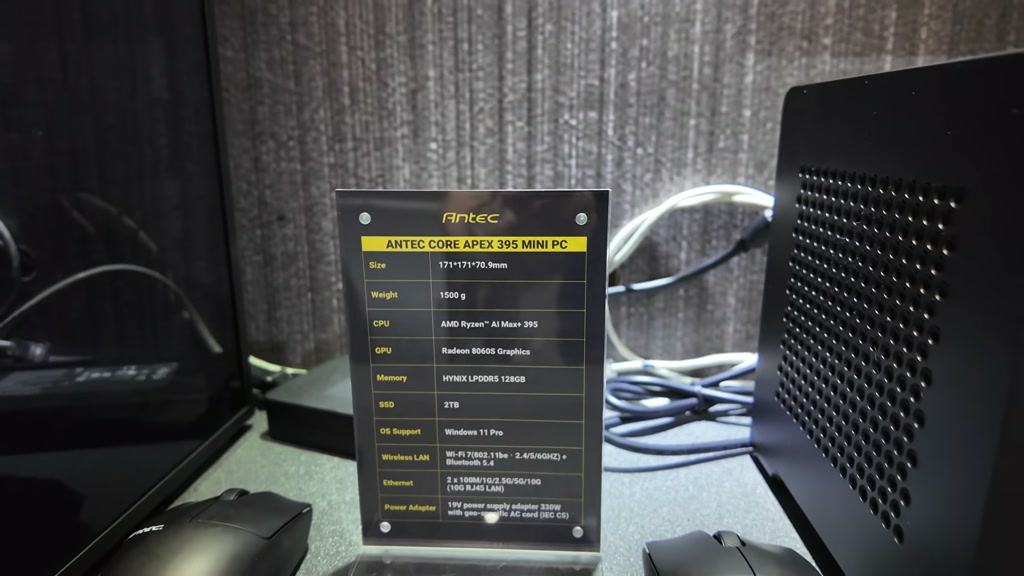
There were still things to watch. The Antec Core Apex 395 Mini PC caught our eye with Ryzen AI Max+ 395 hardware, Radeon 8060S graphics, 128GB of LPDDR5 memory, 2TB storage, Wi-Fi 7, dual Ethernet, and a compact 171 x 171 x 70.9 mm chassis. That is not a budget toy. It is the sort of small workstation that arrives wearing sensible shoes and carrying a spreadsheet.
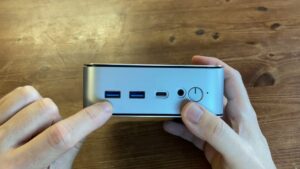
We also saw smaller desktop machines that kept the old mini PC idea alive, but the old bargain magic was weaker. Cheap N100 and N150 boxes worked because they were cheap, useful, and good enough for far more jobs than people expected. If the next low-end wave lands closer to $300 than $150, it becomes a different argument. Still useful, maybe. Still magic? Are we sure?
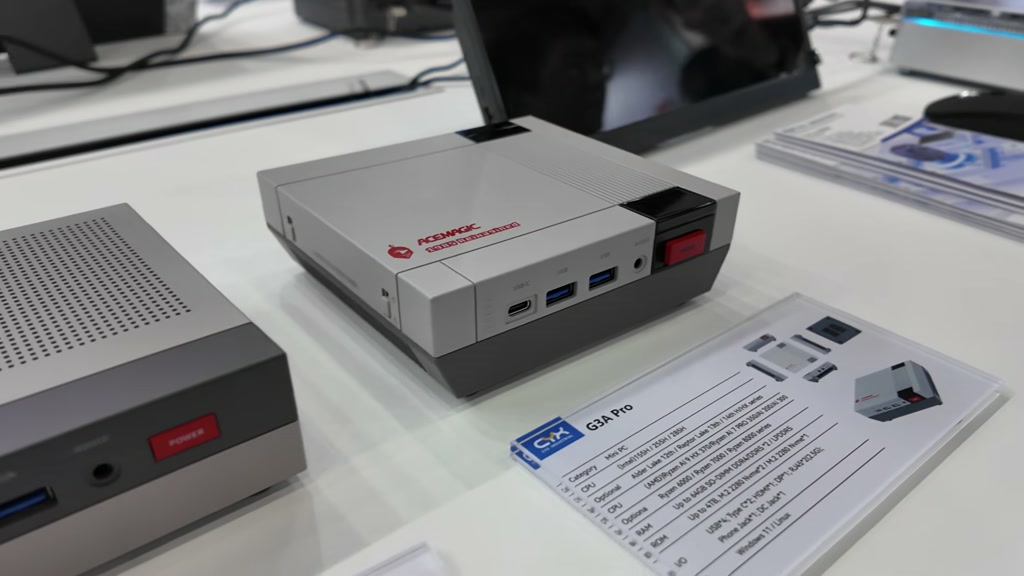
AMD’s side felt especially familiar: competent refreshes rather than a surprise new reason to empty the biscuit tin. That is fine for buyers who need a machine now, but it does not give the category much sparkle.
RAM Prices Are The Ugly Bit
Memory prices matter because mini PCs are often value machines. Once RAM and SSD costs rise hard, the cheap box stops being cheap. Barebones models become less tempting, prebuilt configs get squeezed, and buyers start hanging on to older DDR4 systems for longer.
That is not irrational. If your current mini PC still does browsing, media, emulation, office work, and light gaming, keeping it alive may be the sensible move. The industry would prefer you to replace it with an AI-ready something-or-other, ideally before lunch. The industry also once thought glossy black plastic was a design language, so let us not hand it the steering wheel unsupervised.
What Buyers Should Do
If you need a mini PC today, buy for the job in front of you. For office work, media, light servers, retro gaming, and basic emulation, older and cheaper machines still make sense if the price is right. For heavier gaming or creative work, a modern Ryzen AI or Intel Core Ultra box can be excellent, but check memory configuration carefully.
If you want local AI, wait for real tests unless you already know the software stack you need. Unified memory, NPUs, and big TOPS numbers are not a buying strategy by themselves. They are ingredients. A bag of flour is not a cake, despite what the marketing department may whisper to it.
If you want a handheld, the new Intel Arc G3 Extreme machines look genuinely promising. Just remember that comfort, noise, battery life, and price matter as much as benchmark charts.
FAQ
Should I wait for Nvidia RTX Spark before buying a mini PC?
Wait if local AI is your main reason to upgrade. If you just need a small Windows box for normal desktop work, media, or light gaming, do not wait on a platform that still needs retail testing.
Are cheap mini PCs dead?
Not dead, but squeezed. Memory and SSD pricing make the old $150 bargain box harder to repeat, and many brands are chasing higher-margin AI or workstation machines.
Was there any good news for mini PC fans?
Yes. Handheld PCs looked stronger, Ryzen AI Max compact machines are worth watching, and low-end Intel successors could still be useful. The problem is value, not capability.
Should I upgrade from an older DDR4 mini PC?
Only if it no longer does the job. A working DDR4 system is not suddenly obsolete because a booth sign discovered the word AI and started shouting.
Where To Buy
We do not have a confirmed buying link from the YouTube description for this episode. For now, treat this as buying advice rather than a product listing.
- Current buying link placeholder: link to be added when a confirmed store or affiliate URL is available.
Affiliate disclaimer: We may earn a small commission if you buy through our links. It helps keep the lights on, and occasionally the kettle.
Final Verdict
Computex 2026 did not make us rush home with a shopping list. It made us more cautious. The mini PC market is still interesting, but the easy value era is wobbling under AI demand, memory prices, and a shift toward expensive specialist boxes.
Our advice is simple: buy what solves a real problem, not what has the loudest badge. The best mini PC is still the one that does your work quietly, cheaply, and without requiring a seminar on agentic routines before breakfast.